


 DE
DE
 IT
IT








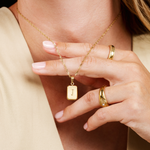


Karat (Carat) – Meaning, Weight, and Use in Jewelry
The term carat frequently appears in the jewelry sector and yet still causes confusion. Many automatically associate carat with gold, while others immediately think of diamonds. In fact, carat describes two different things: on the one hand, the fineness of gold, and on the other hand, the weight of gemstones. Both meanings are firmly established and each has its own rules.
Anyone buying jewelry or dealing with precious metals and gemstones should understand these differences in order to correctly interpret specifications.
Origin and Meaning of the Term Carat
The word carat dates back to antiquity. Even then, people used carob tree seeds as a comparative measure for weight. These seeds were astonishingly uniform in weight and therefore well-suited as a natural unit of measurement. One such seed weighed approximately 0.2 grams.
From this practice, the carat developed as a unit of weight. To this day: 1 carat equals 0.2 grams. This definition is internationally recognized and laid down, among others, in standard DIN 1301-1. The term itself is used differently depending on the context, which often leads to misunderstandings.

Carat as a unit of weight for gemstones
In the context of gemstones, carat is purely a unit of weight. When referring to a 1-carat diamond, it means the stone weighs exactly 0.2 grams. Two carats therefore correspond to 0.4 grams, and five carats to one gram.
However, carat weight alone says little about the visual impact of a stone. The shape, cut, and proportions influence how large a stone appears. A 1-carat diamond can look significantly larger or smaller than another of the same weight, depending on its cut.
Especially with diamonds, carat weight plays a central role in the price. However, the value does not increase uniformly with weight. A 2-carat stone is usually significantly more expensive than two stones each weighing 1 carat, as larger stones are rarer.
Carat in Diamonds and Other Gemstones
Not only diamonds are measured in carats. Other gemstones such as sapphires, rubies, or emeralds are also evaluated by carat weight. However, with colored stones, color is of particular importance. A small, intensely colored stone can be more valuable than a larger, paler stone.
Additionally, clarity, inclusions, and cut influence the value. Therefore, carat weight is always only one part of the overall evaluation of a gemstone and should not be considered in isolation.

Karat in Gold: Fineness and Gold Content
With gold, carat means something completely different. Here, the carat number describes the proportion of pure gold in an alloy. 24 carat stands for pure gold, meaning a gold content of almost 100 percent. Since pure gold is very soft, it is rarely used in jewelry.
Instead, gold alloys are used, where pure gold is mixed with other metals. For example, 14 carat gold consists of 58.5 percent pure gold, with the rest being metals like copper or silver. This mixture provides more strength and suitability for everyday wear.
In Germany and Switzerland, terms like 333 gold or 585 gold are also common. These numbers indicate the gold content in parts per thousand. 585 gold thus corresponds to 14 carat.
Difference between karat for gold and gemstones
A common misconception is to equate carats in gold with carats in gemstones. While carats in gold describe its fineness, in gemstones it is a unit of weight. A 1-carat diamond weighs 0.2 grams, whereas a 14-carat gold ring consists of 58.5 percent pure gold.
Both specifications therefore have nothing to do with each other, even if the same term is used.

Carat, Gram, and Visible Size
While the weight of a gemstone in carats can be precisely converted into grams, it says little about its visible size. Different cuts distribute the weight differently. A round stone often appears more compact than an oval or pear-shaped stone of the same carat weight.
Proportions play a greater role for the eye than the pure weight. Therefore, a smaller stone can sometimes appear larger than a heavier one.
Carat in Everyday Jewelry
In everyday life, carats are primarily encountered when purchasing pieces of jewelry such as rings, necklaces, or earrings. Jewelers and online shops state the carat weight of gemstones as well as the carat value of gold alloys to ensure transparency.
For many people, carats are a point of reference but do not replace a holistic consideration of design, workmanship, and material quality.
Carat and value
The value of a piece of jewelry is never solely determined by its carat weight. For gold, factors like craftsmanship, design, and market price play a role in addition to the gold content. For gemstones, color, clarity, and cut often influence the value more than the weight.
A high-quality ring with a smaller stone can appear more valuable than a heavy stone in a simple setting.

Carat at Luamaya
At LUAMAYA, we work with 14-karat gold-plated stainless steel. This means that a fine layer of 14-karat gold is applied to high-quality 316L stainless steel. The karat value here describes the gold content of the plating, not the weight of the piece of jewelry.
This combination merges the warm look of gold with the robustness of stainless steel. This results in jewelry pieces that are suitable for everyday wear yet offer the appearance of real gold. Gemstones and precious stones at LUAMAYA are selected independently of the gold karat and combined with products based on design, color, and effect.
FAQs - Frequently Asked Questions about Carat
What does carat mean?
Carat refers either to the gold content of a gold alloy or the weight of a gemstone. Which meaning is intended depends on the context.
How many grams is 1 carat?
One carat is exactly 0.2 grams. However, this weight refers to gemstones and not to the weight of gold.
Is more carats always better?
Not necessarily. For gold, more carats mean a higher gold content, but also softer properties. For gemstones, a higher carat weight says nothing about color or cut.
What is the difference between 14 karat and 24 karat gold?
24 karat is pure gold. 14 karat contains 58.5 percent pure gold and is significantly more robust.
Why is karat referred to in the same way for gold and diamonds?
The term has the same origin but is used in two different senses.
What does 14K gold plating mean?
The gold layer consists of a 14-karat gold alloy. The base material underneath is another metal, such as stainless steel.